The Basics
What Actually Separates the Two Methods
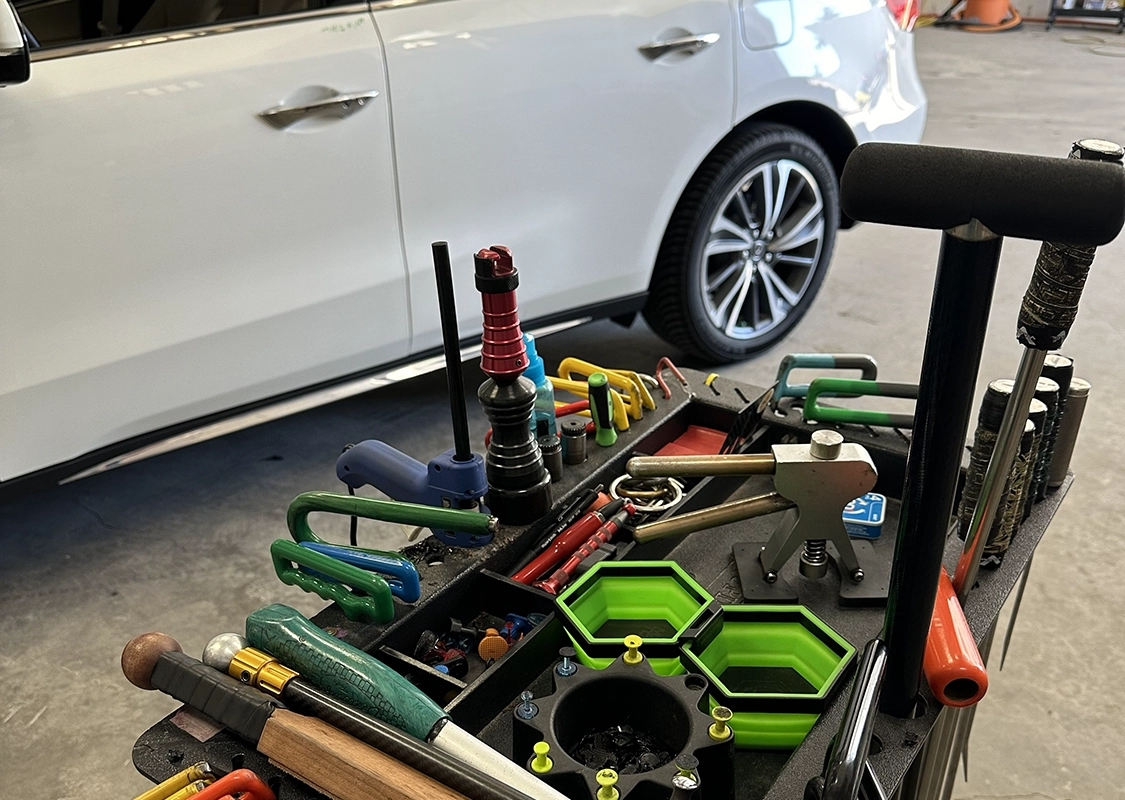
Paintless dent repair reshapes metal from behind the panel using specialized tools, without any filler, sanding, or paint applied. Traditional body shop repair uses filler to rebuild the panel’s shape, then sands, primes, and repaints the area to match the surrounding finish. The core difference isn’t quality of workmanship; both, done well, produce a solid result. The difference is which category of damage each method is actually built to handle. PDR works on smoothly displaced metal where the paint is intact. Body shop repair is built for damage where the metal has been stretched, torn, or where paint is already compromised, situations PDR alone can’t fully correct.
Cost
Cost Comparison
For damage that both methods can handle, PDR is almost always less expensive, since there’s no paint, primer, or filler material involved, and the labor time is typically shorter per panel. A body shop repair on the same dent involves the added cost of matching paint, applying multiple coats, and allowing proper cure time, all of which show up in the final bill. The cost gap widens as damage increases in scope; a body shop repair covering several panels compounds material and labor cost in a way PDR generally does not. Where the comparison shifts is on damage PDR genuinely can’t fix well: forcing PDR onto a crease or torn metal to save money often means a worse result and sometimes a second repair later, which ends up costing more than choosing the right method the first time.
How It Works
How We Decide Which Method Fits Your Damage
We walk through the same assessment regardless of which method your damage ends up needing.
PDR vs Traditional Body Shop Repair
Contact us for an honest assessment of whether PDR or traditional bodywork is the right call for your damage.
Time
Repair Time Comparison
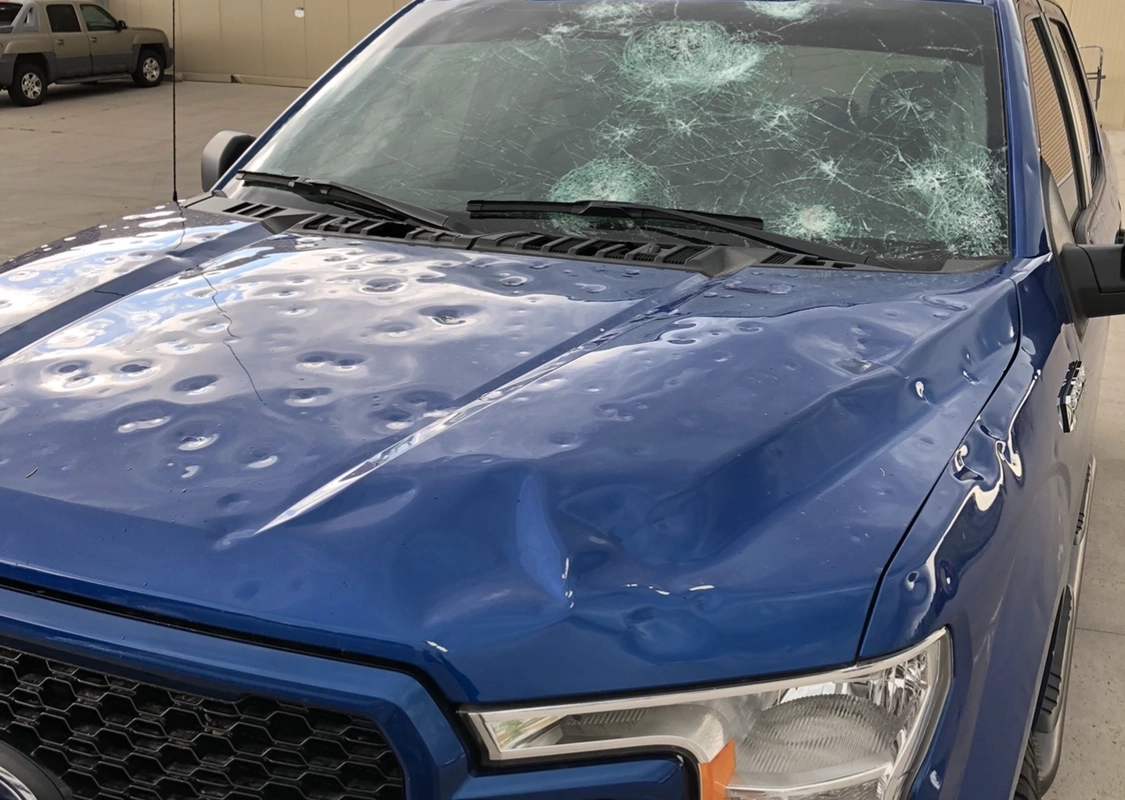
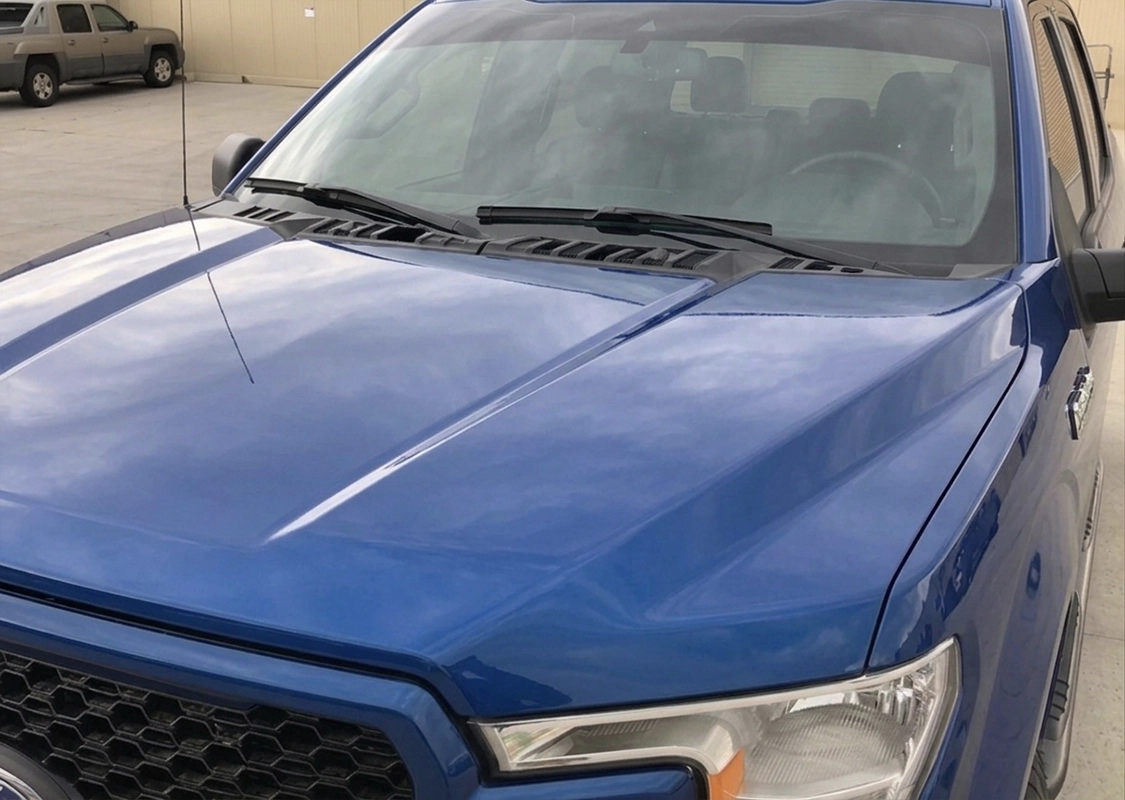
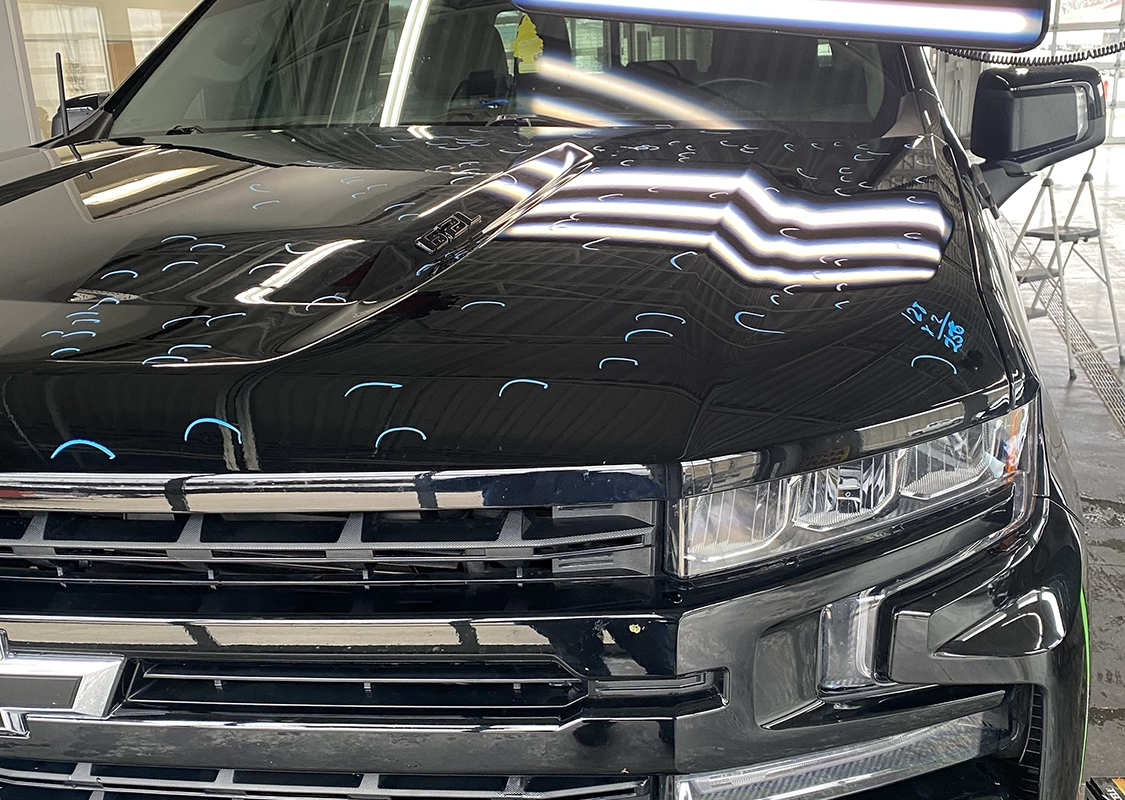
PDR is generally faster for damage it’s suited to, since there’s no paint curing time involved; a single-panel PDR repair can often be finished the same day. Body shop repair requires time for filler to set, primer to cure, paint to be applied in multiple coats, and clear coat to properly harden before the vehicle can be released, which can stretch a single-panel repair to several days even for straightforward damage. This time difference compounds on multi-panel jobs, like a full hail event, where PDR’s faster per-panel pace becomes a bigger advantage the more panels are involved.
Resale Value
Resale Value and Vehicle History
PDR preserves your factory paint entirely, which means a properly PDR-repaired panel doesn’t register as bodywork on a standard vehicle history report. A repaint from a body shop repair, even done well, can show up on some vehicle history reports and may be noticeable to a careful buyer comparing paint depth or texture across panels. For drivers planning to sell or trade in, this makes PDR the stronger choice whenever the damage genuinely qualifies for it. When damage doesn’t qualify for PDR and a repaint is necessary, a quality color-matched repair from a reputable shop still protects resale value far better than leaving visible damage unrepaired.
Paint Integrity
What Happens to Your Factory Paint
This is where the comparison is most clear-cut. PDR never touches your paint, since the repair happens entirely from behind the panel. Body shop repair necessarily involves removing and reapplying paint in the repaired area, and even an excellent color match is still a repaint rather than the factory original. For most drivers, this distinction matters most when the damage in question is genuinely a PDR candidate; there’s little reason to accept a repaint on damage that could have been fixed without touching the paint at all.
When Body Shop Is the Better Call
When Traditional Bodywork Genuinely Wins
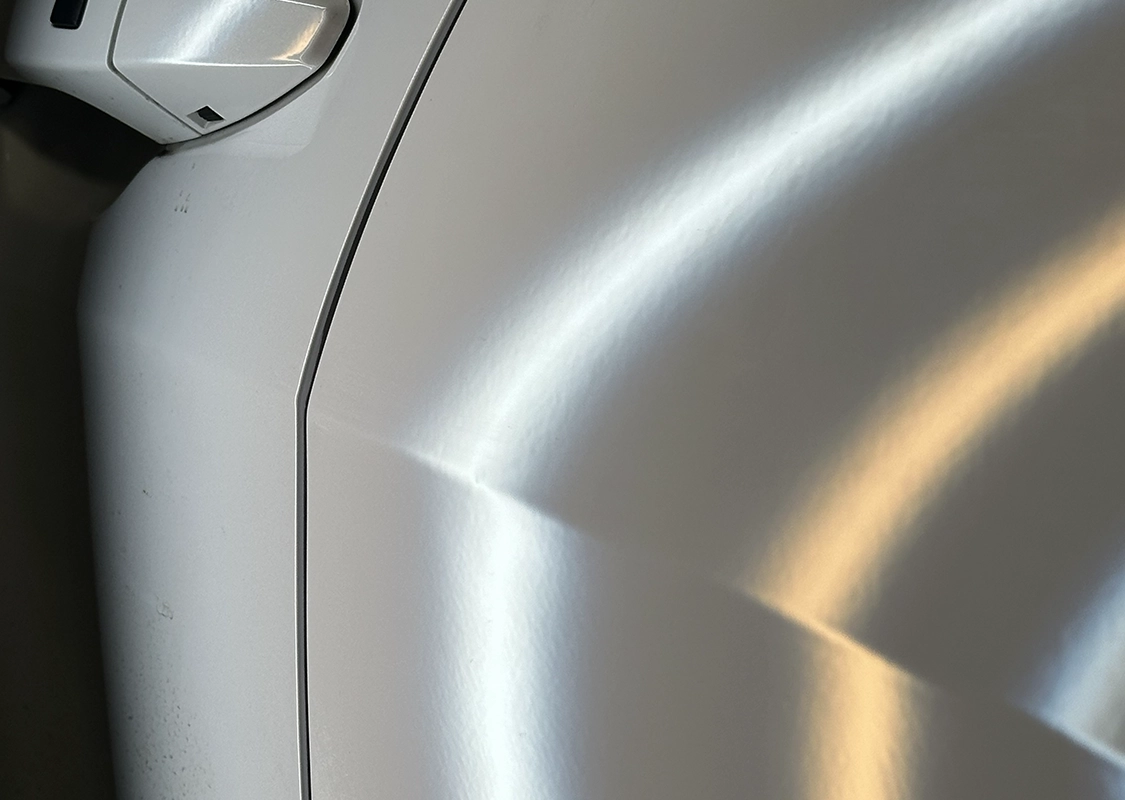
PDR isn’t the right answer for every situation, and being honest about that is part of doing this well. Sharp creases with stretched or work-hardened metal, damage with cracked or chipped paint at the point of impact, and dents right on a sharp body line with limited surrounding metal often need traditional bodywork instead. In these cases, a hybrid approach, using PDR to correct as much as possible before minimal filler and paint work finishes the job, frequently produces a better result than forcing PDR to do more than it’s suited for. If your damage falls into this category, we’ll tell you directly rather than attempting a PDR repair that won’t hold up. Severe collision damage involving bent frames, structural components, or significant panel misalignment also falls firmly outside what PDR addresses, since PDR is a cosmetic dent-reshaping technique, not a structural repair method.
Coverage Area
PDR and Body Shop Guidance Across the Denver Metro
We provide honest PDR versus body shop assessments throughout Denver and the surrounding Front Range, including Aurora, Lakewood, Arvada, Westminster, Thornton, Centennial, Littleton, Highlands Ranch, Parker, Castle Rock, and Colorado Springs. Wherever you’re located, the same inspection and recommendation process applies before any repair method is decided.
Side-by-Side
PDR vs Body Shop at a Glance
Summarizing the comparison: PDR generally costs less and takes less time for damage it’s suited to, preserves your factory paint entirely, and protects resale value better than a repaint. Traditional body shop repair costs more and takes longer due to paint and cure time, but it’s the necessary and genuinely correct choice for stretched metal, torn paint, sharp creases, or structural damage that PDR was never designed to address. Neither method is universally “better”; the right choice depends entirely on which category your specific damage falls into, which is why an honest inspection matters more than a general rule of thumb.
PDR vs Traditional Body Shop Repair FAQ — Colorado
Is PDR always cheaper than a body shop?
For damage PDR can handle, generally yes, since there’s no paint or filler cost involved. For damage that genuinely needs bodywork, forcing PDR can cost more in the long run if it doesn’t hold up.
Does PDR work as well as a body shop repair?
For the damage it’s suited to, yes, often better, since your factory paint is never touched. For damage outside PDR’s capability, like sharp creases, a body shop repair is the more reliable choice.
Can a body shop repair hurt resale value?
A repaint can show up on some vehicle history reports and may be noticeable to a careful buyer, whereas a proper PDR repair does not. This makes PDR the stronger option whenever your damage qualifies.
How do I know which method my damage needs?
An inspection is the most reliable way to know. We check paint condition, crease sharpness, and metal access before recommending PDR, a hybrid approach, or traditional bodywork.
Will you tell me honestly if my damage needs a body shop instead of PDR?
Yes. We’d rather recommend the method that actually fits your damage than force PDR onto something it won’t properly fix.
Get Started
Get an Honest Recommendation
If you’re not sure whether your damage needs PDR or traditional bodywork, contact us for an assessment. We’ll tell you plainly which approach fits, and why, rather than defaulting to whichever method we happen to offer.