
The Basics
What Makes a Crease Different From a Standard Dent
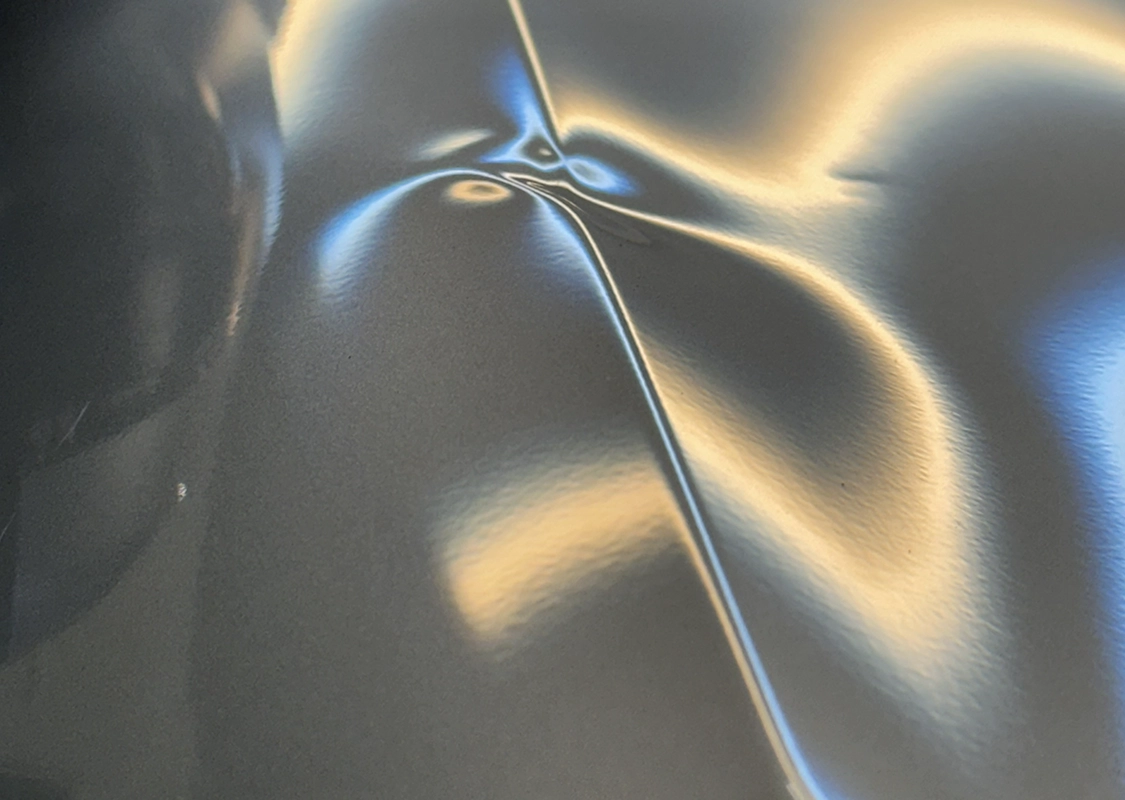
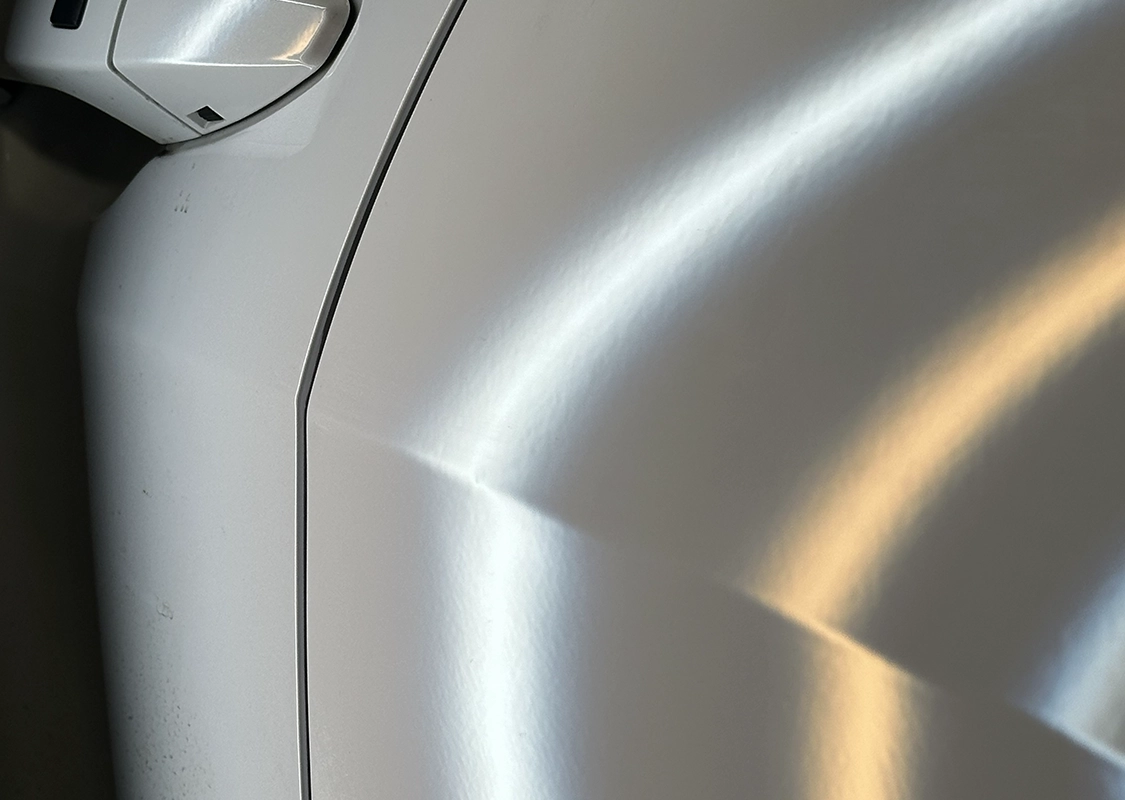
A standard dent, like a hail dimple or a shopping cart ding, involves metal that’s been pushed inward smoothly, without any sharp folding or stretching. A crease is different: the metal has been folded or pinched along a line, often stretching in the process, which changes how the metal responds to standard PDR technique. Creases commonly happen from backing into a fixed object, a door hitting a pole or wall at an angle, or an impact that catches a body line directly. Because the metal along a crease has already been stretched or work-hardened at the fold, it doesn’t always want to return to its original shape the way a smooth dent does, even with the same tools and pressure that would fix a comparable dent elsewhere on the panel. This is the core reason crease dent repair gets evaluated differently from a routine dent repair from the very first look, rather than being quoted the same way over the phone. The location of the crease matters too: a fold running through the flat middle of a panel generally has more surrounding metal to work with than one that crosses a body line, a door handle recess, or a panel seam, all of which limit how much a technician can manipulate the metal from behind without affecting the surrounding area.
How It Works
How We Assess Large Dents and Creases
Every crease repair starts with an honest assessment, since forcing the wrong technique on a crease can make the damage harder to fix, not easier.
Why It Matters
What PDR Can Fix vs. What It Can't
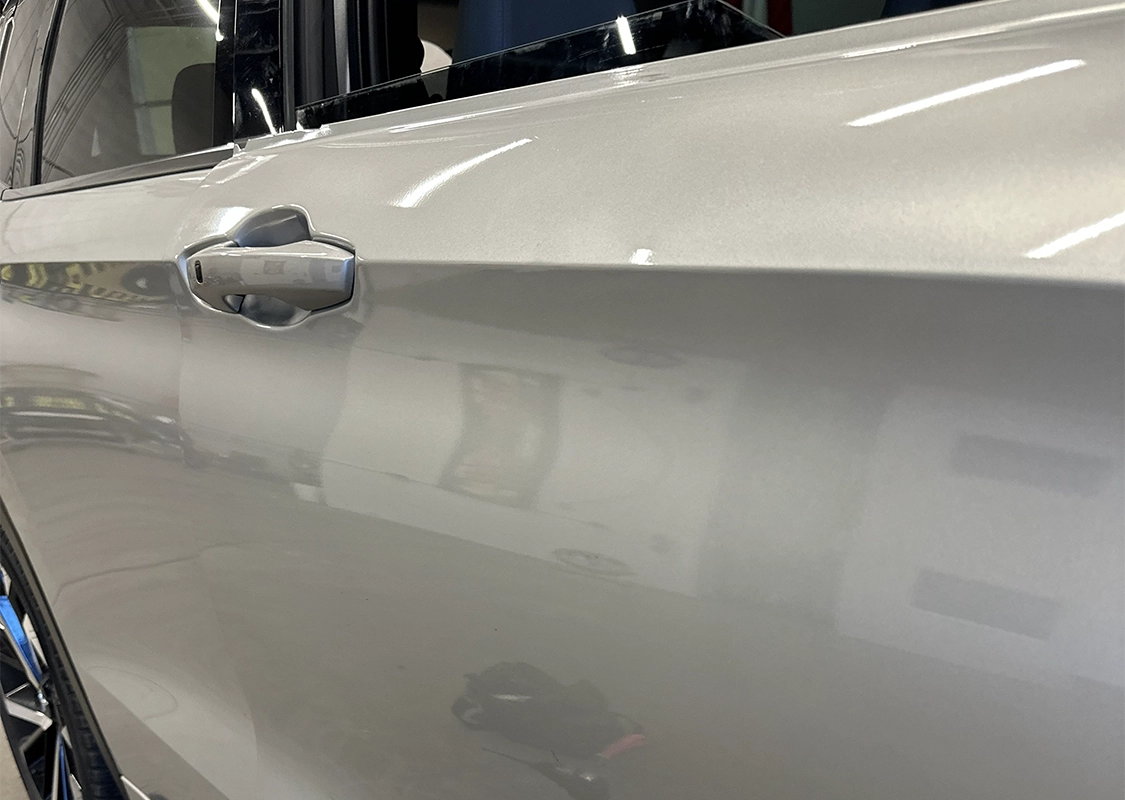
Paintless dent repair works best on dents where the paint is intact and the metal has been smoothly displaced rather than folded or stretched. This covers the large majority of hail damage, door dings, and shallow creases. PDR struggles with damage where the paint has cracked or chipped at the point of impact, since that indicates the metal has been stretched beyond what reshaping alone can correct, and with sharp, pinched creases where the fold itself has work-hardened the metal. Damage right on a sharp body line or panel edge is also harder to access with standard tools and often has less surrounding metal to work with. In these cases, a hybrid approach or traditional bodywork with filler and paint typically produces a better, more lasting result than pushing PDR past what it’s suited for.
Large Dent & Crease Repair
Contact us with photos of your dent or crease and we’ll give you an honest read on whether PDR can fix it.
What to Expect
What Happens If Your Damage Needs More Than PDR
If our assessment shows your dent or crease needs more than standard paintless dent repair, that doesn’t mean you’re stuck starting over somewhere else. In many cases, a hybrid approach works best: we use PDR to correct as much of the panel as possible from behind, minimizing the amount of filler and paint work needed on top of it. This keeps more of your factory paint intact than a full traditional repair would, even when PDR alone can’t finish the job. If a panel genuinely needs full traditional bodywork, we’ll explain exactly why, what that process typically involves, and what to expect in terms of timeline, so you’re making an informed decision either way rather than being surprised partway through.
Coverage Area
Large Dent & Crease Repair Across the Denver Metro
We assess and repair large dents and creases throughout Denver and the surrounding Front Range, including Aurora, Lakewood, Arvada, Westminster, Thornton, Centennial, Littleton, Highlands Ranch, Parker, Castle Rock, and Colorado Springs. Whether your damage turns out to be a straightforward PDR job or needs a different approach, we’ll give you that answer during your first inspection rather than after you’ve already committed to a repair method.
Large Dent & Crease Repair FAQ — Denver
Can paintless dent repair fix a crease?
Sometimes. Shallow, gently folded creases can often be repaired with PDR. Sharp, deeply pinched creases with stretched or work-hardened metal usually need a hybrid approach or traditional bodywork instead.
How can I tell if my dent is too large for PDR?
Size alone isn’t the deciding factor; access and metal condition matter more. A large but smoothly displaced dent with good access can often still be repaired with PDR, while a small but sharp crease may not be.
What happens if the paint is cracked at the dent?
Cracked paint usually means the metal has stretched beyond what PDR alone can correct. In these cases, some paint or filler work is typically needed alongside any dent reshaping.
Will you tell me honestly if PDR won't work?
Yes. We’d rather tell you upfront that a crease needs a different approach than attempt a repair that won’t hold up or look right.
Do you offer both PDR and traditional bodywork?
We specialize in paintless dent repair. For damage that genuinely needs traditional bodywork, we’ll tell you clearly and can point you toward next steps.
Get Started
Get an Honest Read on Your Dent or Crease
If you’re not sure whether your dent or crease can be fixed with paintless dent repair, contact us for an inspection or send photos for an initial read. We’ll tell you plainly what we see and recommend the repair approach that actually fits, not just the one that’s easiest for us to sell.