The Basics
Why EVs Need a Different Repair Approach
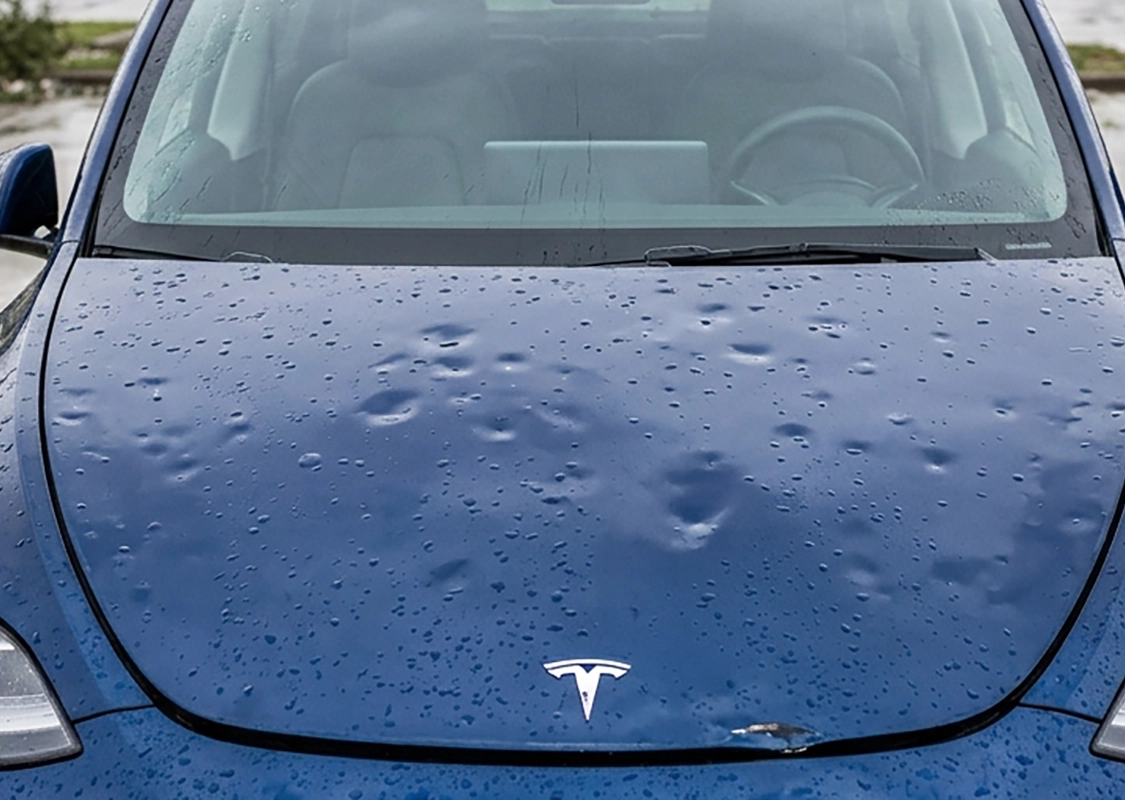
Many EVs, including Tesla’s Model 3, Model Y, Model S, and Model X, along with Rivian’s trucks and SUVs, use aluminum body panels rather than the steel panels found on most traditional vehicles. Aluminum behaves differently under repair tools: it requires more controlled heat, a slower working pace, and more careful technique than steel, since aggressive pressure can stretch or crack aluminum rather than smoothly reshape it. EVs also tend to pack more sensors and cameras into body panels and trim than a typical gas vehicle, supporting features like driver-assist systems and parking cameras, so a technician working on an EV needs to know exactly where those components sit to avoid disturbing them during a repair. Our technicians are trained specifically on aluminum-safe paintless dent repair, so an EV hood or fender is treated with the care it actually requires.
How It Works
Our Tesla and EV Hail Repair Process
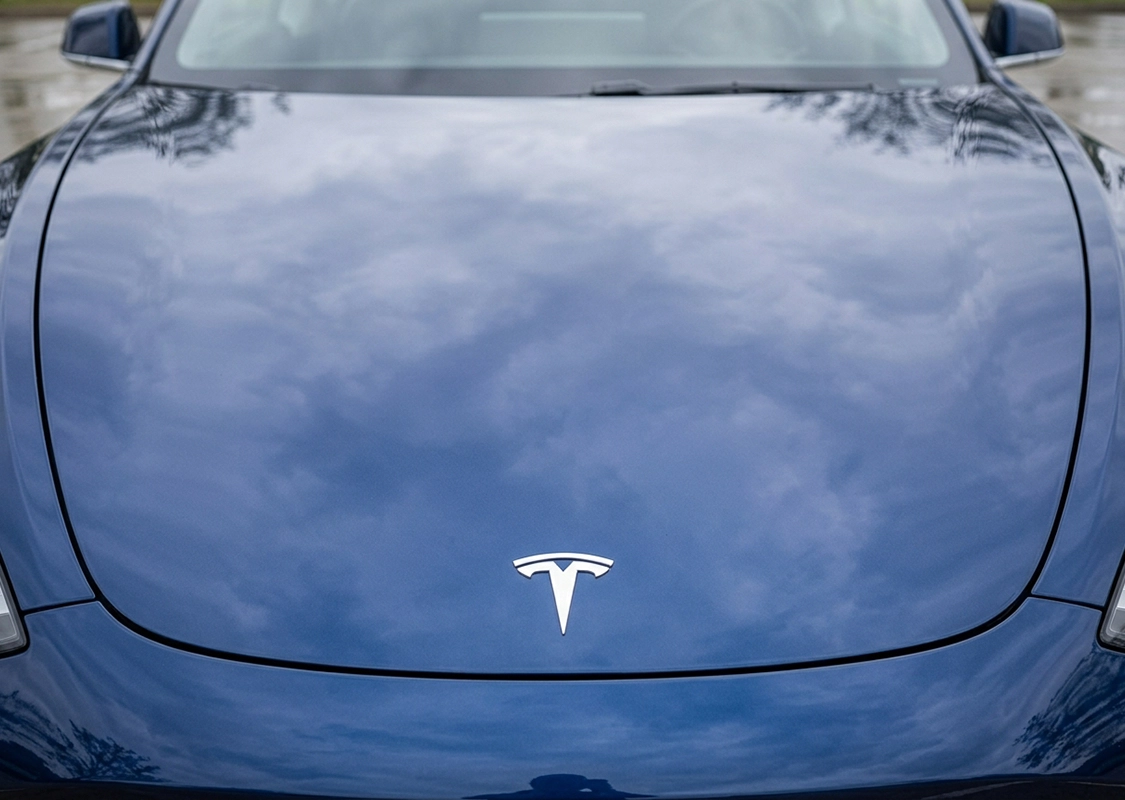
EV hail repair follows the same core process as a standard vehicle, with extra care taken around aluminum panels and sensor locations.
Why It Matters
What Stays Untouched During an EV Hail Repair
A common question we hear from Tesla and EV owners is whether hail repair puts the battery or high-voltage systems at risk. Paintless dent repair works on the exterior body panels only, reshaping surface metal from behind the panel, and does not involve any work on the battery pack, high-voltage wiring, or drivetrain components, which sit in separate, structurally protected areas of the vehicle. Because there’s no cutting, welding, or drilling involved in PDR, there’s no reason for a standard hail repair to require disconnecting or accessing the high-voltage system at all. If a repair happens to involve a panel located near a camera or sensor, we take extra care during that specific repair and check that the system is working normally afterward, but this is a precaution around a single component, not a change to how the broader repair process works.
Tesla & EV Hail Damage Repair
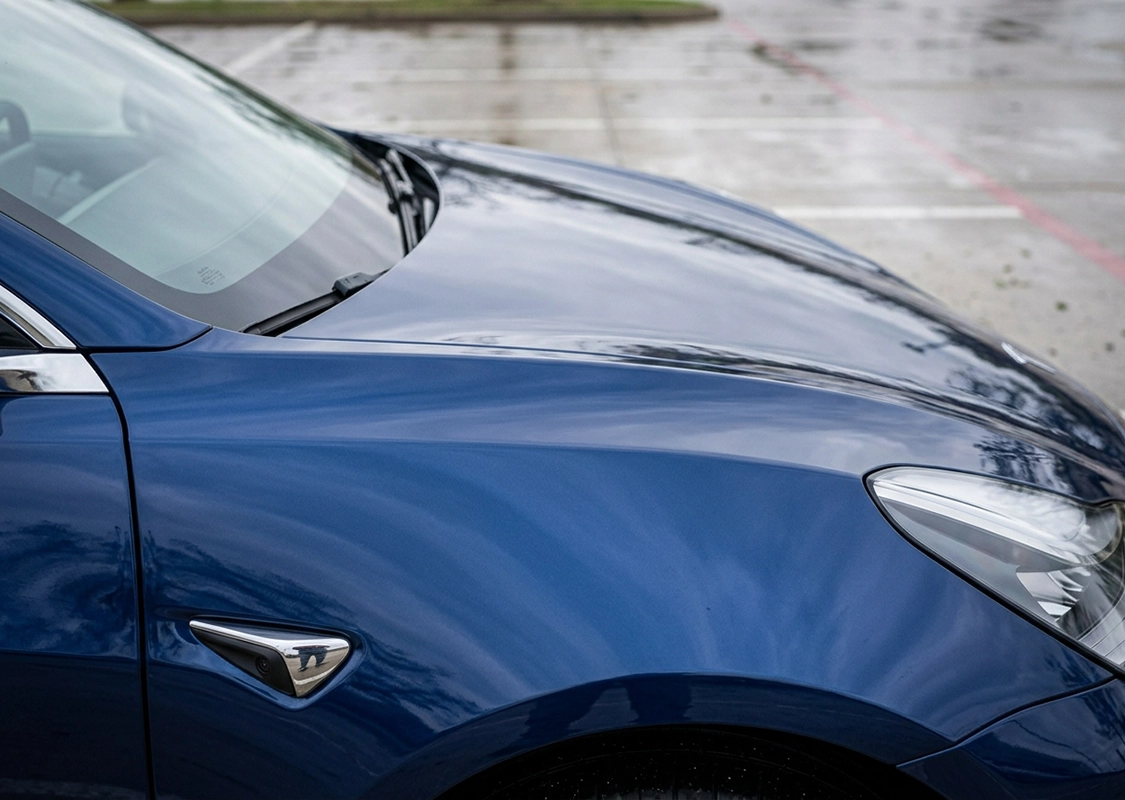
Contact us with your EV’s year, make, and model, and we’ll assess your hail damage and provide a quote.
Preserving Value
Why Paint Preservation Matters More on an EV
EVs generally carry a higher purchase price than comparable gas vehicles, and many owners plan to keep them for years given the vehicle’s overall cost. Paintless dent repair preserves the factory paint entirely, with no repainting or filler involved, which matters more on a higher-value vehicle where resale price and vehicle history reports carry real weight at trade-in or resale time. A proper PDR repair does not register as bodywork on a standard vehicle history report the way a repaint typically would, keeping your EV’s history clean.
Model-Specific Notes
Repair Notes for Common Tesla and EV Models
Tesla’s Model 3 and Model Y use a mix of steel and aluminum panels depending on the section, with the hood, doors, and trunk generally being strong PDR candidates when access is reasonable. Model S and Model X share a similar mixed-panel construction, with some larger panels requiring more time due to their size. Rivian’s R1T and R1S use aluminum body panels throughout much of the exterior, similar in approach to aluminum-bodied trucks from other manufacturers, and respond well to aluminum-safe PDR technique. Across all of these models, the frunk (front trunk) area and any panel adjacent to a charging port receive extra attention during inspection, since these areas sometimes have different access characteristics than a standard hood or fender.
Coverage Area
Tesla and EV Hail Repair Across the Denver Metro
We provide Tesla and EV hail damage repair throughout Denver and the surrounding Front Range, including Aurora, Lakewood, Arvada, Westminster, Thornton, Centennial, Littleton, Highlands Ranch, Parker, Castle Rock, and Colorado Springs. Many EV owners prefer mobile repair since it avoids taking the vehicle to a shop and interrupting a charging schedule, and our mobile units carry the same aluminum-safe tools used in-shop, so most single-panel EV dents can be handled right at your home or office.
Tesla & EV Hail Damage Repair FAQ — Denver
Is paintless dent repair safe for Tesla and other EVs?
Yes. PDR works on exterior body panels only and does not involve the battery, high-voltage wiring, or drivetrain, which sit in separate, protected areas of the vehicle. Tesla hail damage repair using PDR is generally the preferred method for exactly this reason.
Do EV body panels need different repair tools than gas vehicles?
Many EVs use aluminum panels, which require more controlled heat and a slower repair pace than steel. Our technicians are trained specifically for aluminum-safe paintless dent repair.
Will a hail repair affect my EV's sensors or cameras?
We check for sensor and camera locations near any damage during inspection and take extra care during that specific repair. Standard hail repair away from those areas doesn’t involve them at all.
Do you offer mobile repair for Tesla and EVs?
Yes. Most single-panel EV dents can be repaired on site at your home or office using the same aluminum-safe tools we use in-shop.
Does hail repair affect my EV's resale value?
Paintless dent repair preserves your factory paint and doesn’t register as bodywork on a standard vehicle history report, so a properly repaired EV keeps its resale value intact.
Get Started
Get Your EV Repaired the Right Way
If your Tesla, Rivian, or other EV has hail damage, contact us for an inspection or a photo quote. We’ll assess every panel, tell you honestly which repair approach fits your vehicle, and get it back to full condition without touching your factory paint.